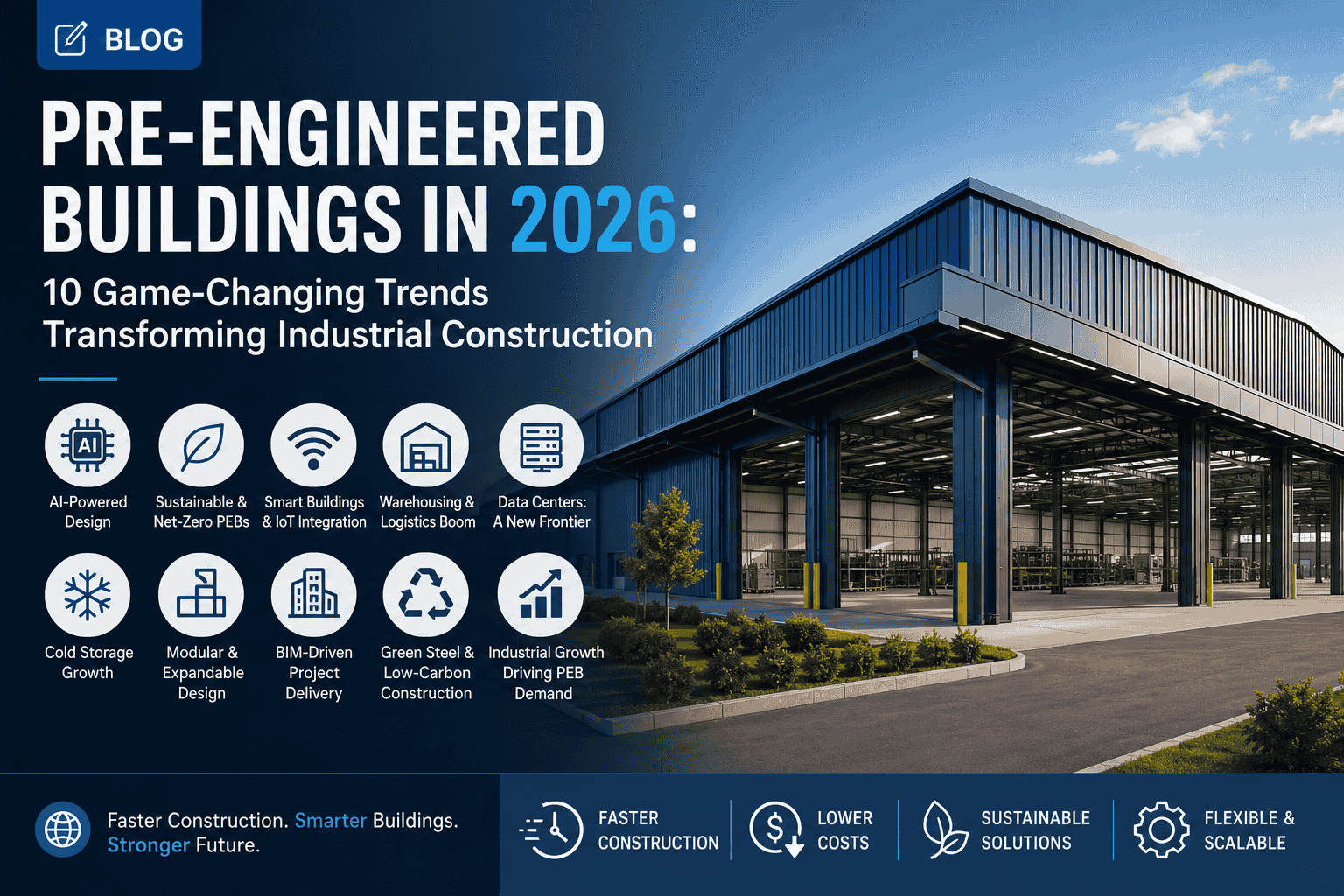
The logistics industry is evolving at an unprecedented pace, and reliability has become the top priority for businesses. Warehouses, as the backbone of supply chains, must be resilient enough to handle unpredictable weather conditions without disrupting operations. Traditional warehouses often fail to meet these demands, leading to costly downtime. This is why investing in a pre engineered building for warehouse has become the preferred choice for modern logistics companies. These all-weather structures are durable, cost-effective, and designed to ensure uninterrupted operations, no matter the climate.
One of the most effective ways to build such resilient structures is through a pre engineered building for warehouse. These PEB structures are designed with durability, flexibility, and cost-efficiency in mind, making them the preferred choice for modern logistics companies. By combining advanced engineering with weatherproof materials, all-weather warehouses are redefining how businesses think about storage and distribution.
Why All-Weather Warehouses Matter
Logistics companies face constant pressure to deliver faster, cheaper, and more reliably. Weather disruptions — from monsoon rains to extreme heat — can damage goods, halt operations, and reduce productivity. An all-weather warehouse minimizes these risks by:
- Preventing leaks and rust with advanced roofing and cladding.
- Maintaining structural integrity even during storms.
- Reducing long-term maintenance costs.
- Offering customizable layouts for diverse storage needs.
When built as a pre engineered building for warehouse, these facilities also provide scalability, allowing businesses to expand without major construction delays.
Benefits of Pre Engineered Buildings for Warehouses
The concept of pre engineered building for warehouse has revolutionized logistics infrastructure. Compared to conventional warehouses, PEB warehouses offer:
- Speed of Construction: Prefabricated components allow rapid assembly.
- Durability: Built to withstand heavy rains, winds, and corrosion.
- Flexibility: Easily expanded or modified as business needs grow.
- Cost-Effectiveness: Reduced construction and maintenance expenses.
- Eco-Friendliness: Energy-efficient materials and insulation.
With India’s unpredictable weather conditions, logistics companies see PEB warehouses as a smart investment that ensures business continuity.
The Future of Reliable Logistics
The demand for e-commerce, cold storage, and just-in-time delivery continues to rise. To stay competitive, companies need warehouses that can operate in any condition. All-weather warehouses built as pre engineered buildings provide that reliability, making them the future standard in logistics.
They align with global trends toward sustainability, faster construction, and adaptable infrastructure. In the next decade, businesses that adopt PEB warehouses will enjoy lower risks, higher efficiency, and stronger resilience against climate change.
FAQ
1. What is a pre engineered building for warehouse and why is it better than traditional construction?
A pre engineered building for warehouse is a modern construction method where steel structures are manufactured in a factory and then assembled on-site. This approach saves significant time compared to traditional brick-and-mortar construction. Unlike conventional warehouses, PEB warehouses are designed for strength, durability, and flexibility. They use high-quality materials that resist leaks, rust, and corrosion, making them ideal for all-weather conditions. Logistics businesses prefer PEB warehouses because they reduce long-term maintenance costs and ensure faster returns on investment. Additionally, their modular design allows easy expansion as business grows. By adopting a pre engineered building for warehouse, companies gain a facility that is not only cost-efficient but also capable of withstanding India’s unpredictable climate, ensuring uninterrupted business operations.
2. How does a pre engineered building for warehouse handle extreme weather conditions?
A pre engineered building for warehouse is specifically designed to perform well in harsh climates. These warehouses are built using high-strength steel frames, insulated panels, and weatherproof cladding systems that protect against heavy rainfall, storms, and high humidity. The roofing systems are engineered to prevent leaks and rust, ensuring goods remain safe and dry. Unlike traditional warehouses, which may require frequent repairs, PEB warehouses are tested for structural integrity under extreme wind loads and seismic activity. This makes them highly reliable for logistics companies operating in regions with unpredictable weather. Another advantage is their energy-efficient insulation, which helps maintain stable internal temperatures. By choosing a pre engineered building for warehouse, businesses can safeguard their supply chains and ensure consistent operations, regardless of environmental challenges.
3. What are the cost benefits of using a pre engineered building for warehouse?
One of the major advantages of a pre engineered building for warehouse is cost efficiency. Since the components are prefabricated in a factory, construction time is significantly reduced, leading to lower labor expenses and faster project completion. Businesses can start operations quickly, avoiding costly delays. PEB warehouses also require less maintenance because they resist corrosion, leaks, and structural damage. This means long-term savings compared to conventional warehouses. Furthermore, the modular design allows for easy expansion without incurring high reconstruction costs. Energy-efficient insulation and ventilation reduce electricity bills, especially for temperature-sensitive goods. Overall, a pre engineered building for warehouse minimizes both upfront and ongoing expenses, making it the smarter choice for logistics companies seeking long-term financial sustainability while maintaining resilience against unpredictable weather.
4. Can a pre engineered building for warehouse be customized for different logistics needs?
Yes, one of the biggest strengths of a pre engineered building for warehouse is its flexibility in design. Unlike conventional warehouses that require significant alterations to meet specific needs, PEB warehouses can be customized from the start. Businesses can choose the height, width, span, and layout depending on the type of goods they store. For example, cold storage facilities can be equipped with advanced insulation, while e-commerce warehouses may prioritize wide bays for quick movement of goods. Additionally, PEB warehouses allow future expansion by simply adding extra bays or extending the structure. This adaptability is crucial in logistics, where demand patterns change rapidly. A pre engineered building for warehouse provides companies with a scalable solution that grows with their business, ensuring operational efficiency and uninterrupted service.
5. Why is a pre engineered building for warehouse considered the future of logistics infrastructure?
The logistics industry is evolving rapidly, and resilience is the key to staying competitive. A pre engineered building for warehouse is considered the future because it addresses all the limitations of traditional construction. With faster build times, lower costs, high durability, and energy efficiency, PEB warehouses provide everything modern supply chains need. They are especially valuable in regions with extreme weather, ensuring uninterrupted business operations year-round. Their adaptability also supports the diverse needs of e-commerce, cold storage, and just-in-time delivery. As sustainability becomes a global priority, PEB warehouses also contribute with eco-friendly materials and reduced energy consumption. In short, a pre engineered building for warehouse is not just a storage solution but a strategic asset for logistics companies looking to build reliability, resilience, and long-term growth into their operations.