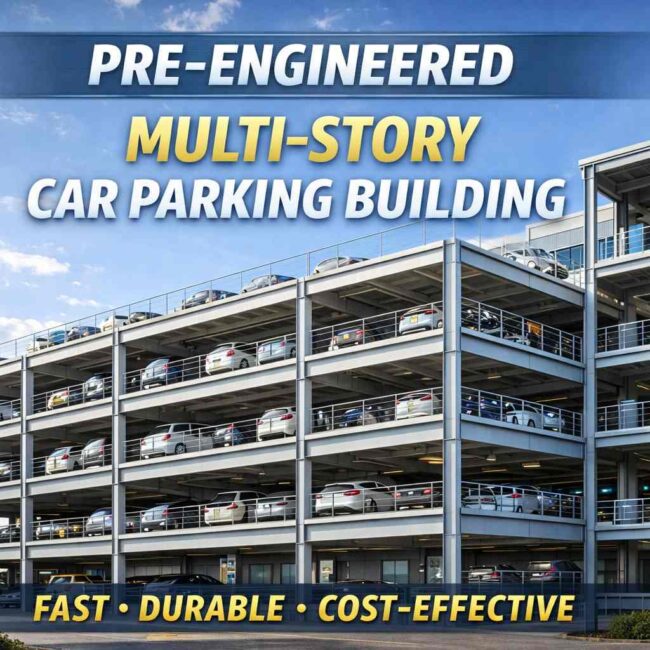

The rapid pace of urbanization, coupled with a significant rise in private vehicle ownership, has intensified the demand for efficient parking infrastructure. Conventional parking methods, which rely heavily on horizontal space, are increasingly inadequate in densely populated cities. In this context, multi-level car parking systems have emerged as a practical and sustainable solution to address space constraints while improving overall urban mobility.
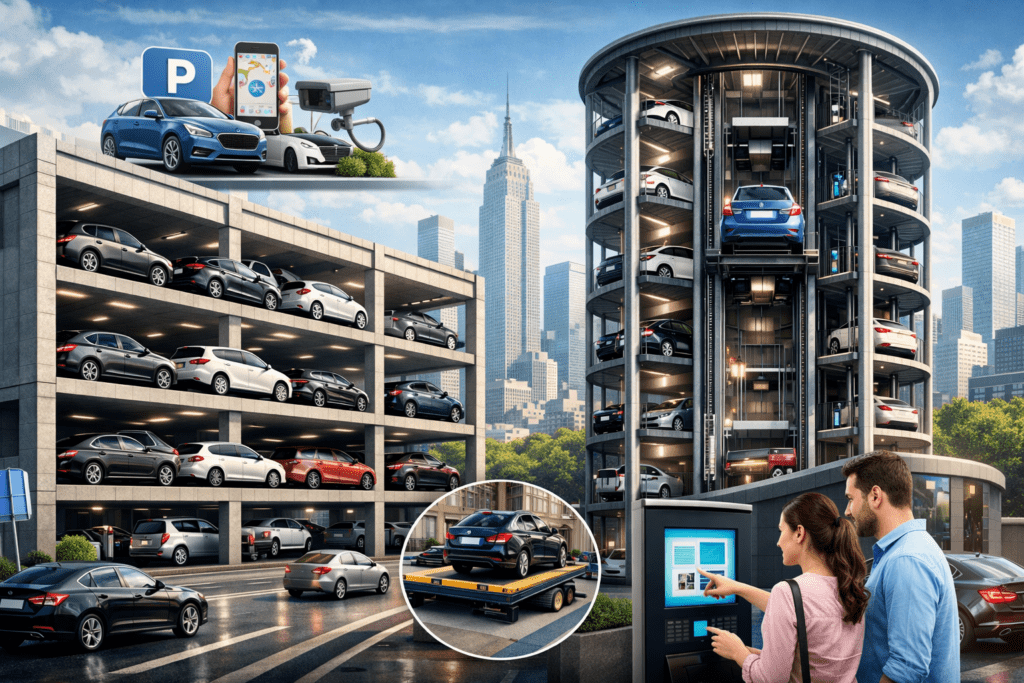
Concept and Design
A multi-level car parking system is an engineered structure that accommodates vehicles across multiple tiers or levels, thereby maximizing land utilization through vertical expansion. These systems are designed to optimize parking capacity within limited urban footprints, making them particularly suitable for commercial complexes, residential developments, airports, and public facilities.
Classification of Multi-Level Parking Systems
1. Ramp-Based Parking Systems
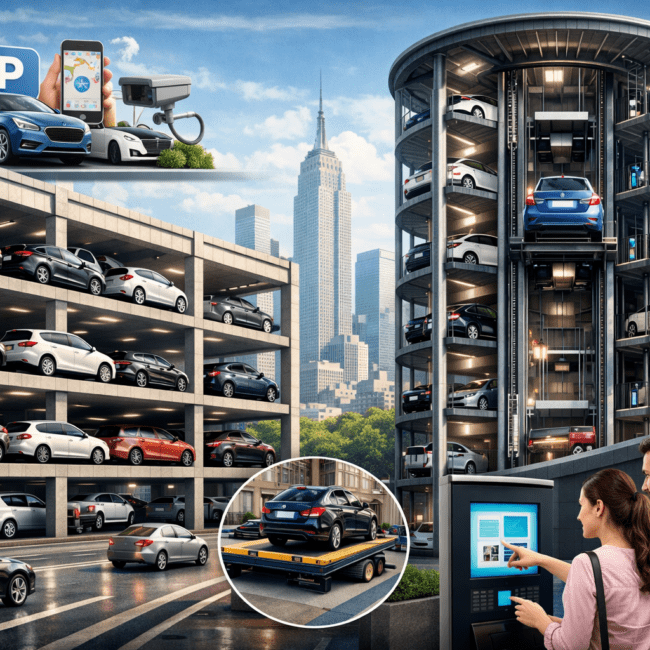
Ramp-based systems are the most widely adopted form of multi-level parking. They allow vehicles to move independently between levels using inclined ramps. These systems are valued for their simplicity, reliability, and ease of operation.
2. Automated Parking Systems (APS)
Automated systems utilize advanced mechanical and electronic technologies to park and retrieve vehicles with minimal human intervention. Drivers leave their vehicles at designated entry points, and the system transports them to available parking slots. This approach enhances efficiency and minimizes space wastage.
3. Puzzle Parking Systems
Puzzle systems employ a combination of horizontal and vertical movement to rearrange vehicles within a compact grid. These systems are particularly effective in areas with severe space limitations.
4. Tower Parking Systems
Tower parking systems are vertical structures where vehicles are stacked using lift mechanisms. They are highly space-efficient and are often implemented in urban centers with extremely high land costs.
Advantages
Optimal Land Utilization
By leveraging vertical space, multi-level parking systems significantly increase parking capacity without requiring additional land acquisition.
Improved Traffic Flow
Efficient parking management reduces the time spent searching for parking spaces, thereby alleviating traffic congestion and improving circulation within urban areas.
Enhanced Security
Modern parking facilities are equipped with surveillance systems, controlled access points, and automated handling, ensuring higher levels of safety for both vehicles and users.
Environmental Benefits
Reduced vehicle idling and circulation within parking areas contribute to lower fuel consumption and decreased greenhouse gas emissions.
Challenges
High Capital Investment
The development of multi-level parking structures, particularly automated systems, involves substantial initial costs in terms of design, construction, and technology integration.
Maintenance and Operational Complexity
Advanced systems require regular maintenance and skilled operation to ensure reliability and longevity.
User Acceptance
The adoption of automated systems may require user awareness and adaptation, especially in regions where such technologies are relatively new.
Future Prospects
The future of multi-level car parking systems lies in the integration of smart technologies. Innovations such as real-time occupancy monitoring, mobile-based booking systems, artificial intelligence for space optimization, and electric vehicle (EV) charging infrastructure are transforming parking into a seamless and user-centric experience. These advancements align with the broader vision of smart and sustainable cities.
Multi-level car parking systems represent a forward-thinking approach to addressing the growing challenges of urban parking. By combining efficient design, technological innovation, and sustainable practices, these systems play a vital role in enhancing urban infrastructure. As cities continue to expand, the adoption of such intelligent parking solutions will be essential for ensuring organized, efficient, and environmentally responsible urban development.