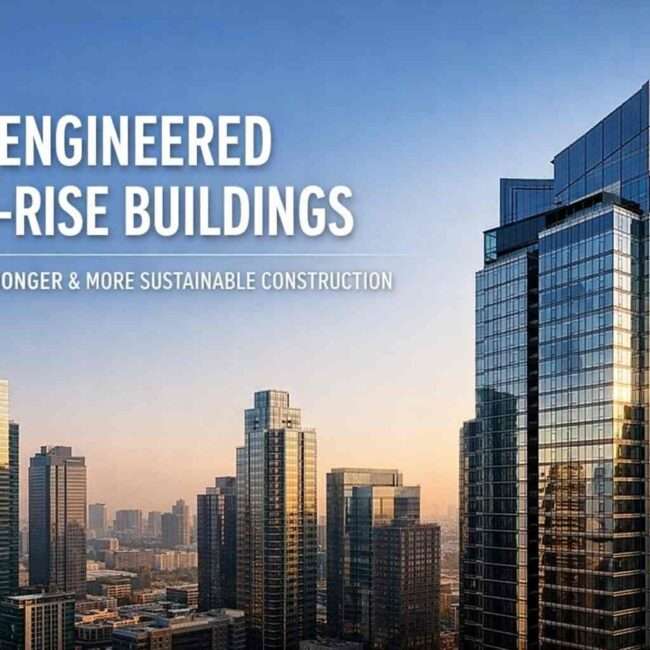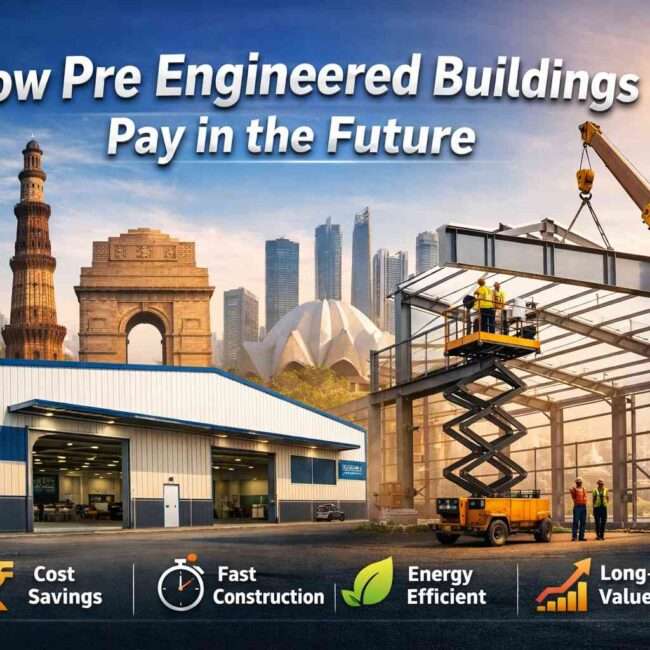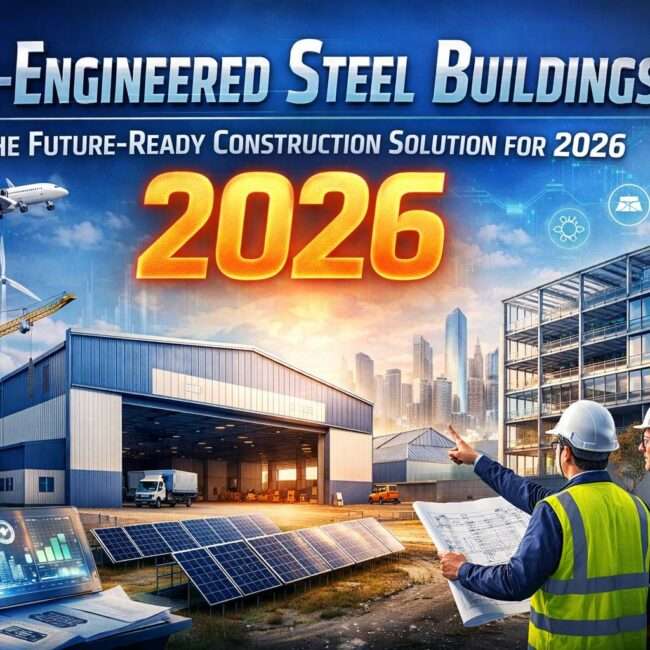

The global construction industry is experiencing a major transformation, and Pre-Engineered Buildings (PEBs) are leading the change. What was once considered an economical solution for warehouses has evolved into a sophisticated construction system powering manufacturing plants, logistics hubs, cold storage facilities, commercial buildings, and even high-tech data centers.
As businesses demand faster project completion, lower costs, greater sustainability, and scalable infrastructure, PEBs are becoming the preferred construction method worldwide.
In this article, we’ll explore the top PEB trends shaping 2026 and why industry leaders are rapidly adopting this construction approach.
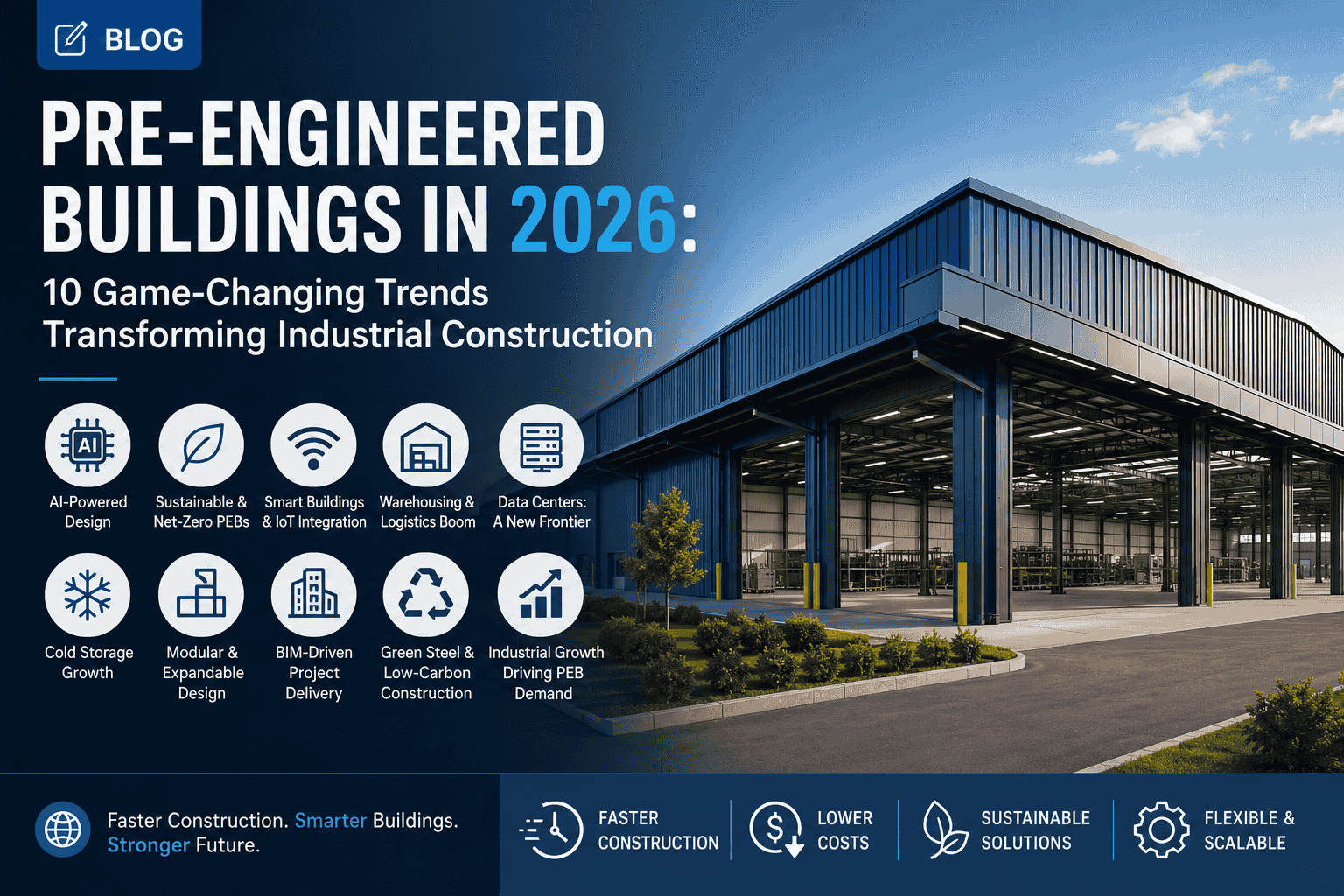
1. AI-Powered Design Is Revolutionizing PEB Engineering
Artificial Intelligence is becoming one of the biggest disruptors in the PEB sector.
Modern engineering platforms can now analyze thousands of structural variations within minutes, helping designers optimize:
- Steel consumption
- Structural performance
- Wind load resistance
- Seismic performance
- Material efficiency
AI-driven design significantly reduces engineering time while improving overall building performance.
Why It Matters
Companies can now achieve stronger structures with less material, reducing both costs and carbon emissions.
2. Sustainable and Net-Zero PEBs Are Becoming the New Standard
Sustainability is no longer a competitive advantage—it’s a requirement.
Modern PEB projects increasingly incorporate:
- Solar-ready roofing systems
- Recyclable steel structures
- Energy-efficient insulation panels
- Natural ventilation systems
- Smart lighting technologies
Businesses are actively pursuing green certifications and ESG goals, making sustainable PEB solutions highly attractive.
Key Benefit
Reduced operational costs and long-term energy savings.
3. Smart Buildings and IoT Integration
The rise of Industry 4.0 is creating demand for intelligent industrial facilities.
Today’s PEB structures can integrate:
- IoT sensors
- Predictive maintenance systems
- Smart energy monitoring
- Occupancy tracking
- Automated HVAC controls
Facility managers gain real-time visibility into building performance and operational efficiency.
4. Warehousing and Logistics Are Driving Massive Growth
The rapid growth of e-commerce continues to fuel demand for large-span warehouse facilities.
PEBs are ideal for:
- Distribution centers
- Fulfillment hubs
- Logistics parks
- Manufacturing warehouses
Their column-free spans and flexible layouts make them highly suitable for modern storage and distribution operations.
Industry Impact
Global warehouse expansion is expected to remain one of the strongest growth drivers for PEB adoption through 2030.
5. Data Centers Are Creating a New PEB Opportunity
Artificial Intelligence, cloud computing, and digital transformation are driving unprecedented demand for data centers.
PEBs offer:
- Faster deployment
- Scalable expansion
- Cost-effective construction
- High structural reliability
Many developers are now evaluating pre-engineered structures for data center campuses due to compressed construction schedules.
6. Cold Storage Infrastructure Is Expanding Rapidly
Food processing, pharmaceuticals, and e-commerce grocery delivery have increased demand for temperature-controlled facilities.
PEBs are becoming the preferred solution because they support:
- High-performance insulation systems
- Large clear spans
- Fast construction schedules
- Energy-efficient operations
The cold-chain sector is expected to remain a major growth segment over the next decade.
7. Modular and Expandable Building Design
Businesses no longer want buildings that become obsolete after five years.
Modern PEB systems are designed for:
- Future expansion
- Facility upgrades
- Additional bays
- Flexible floor plans
Organizations can scale operations without major reconstruction costs.
Business Advantage
Infrastructure evolves alongside business growth.
8. BIM Is Transforming Project Delivery
Building Information Modeling (BIM) has become a critical technology in modern PEB projects.
Benefits include:
- Better collaboration
- Clash detection
- Faster approvals
- Improved project accuracy
- Reduced construction errors
BIM integration is helping developers shorten project timelines while improving quality control.
9. Green Steel Is Becoming a Competitive Differentiator
Environmental regulations are encouraging manufacturers to adopt lower-carbon steel production methods.
Forward-thinking PEB companies are investing in:
- Green steel partnerships
- Recycled steel content
- Low-carbon supply chains
- Sustainable manufacturing processes
This trend is expected to accelerate as governments introduce stricter sustainability requirements.
10. India’s Industrial Expansion Is Fueling PEB Demand
India is emerging as one of the world’s fastest-growing PEB markets.
Several factors are contributing to growth:
- Manufacturing expansion
- Industrial corridors
- Logistics parks
- Infrastructure investments
- Make in India initiatives
Industries such as automotive, electronics, pharmaceuticals, and FMCG are increasingly choosing PEB structures due to faster deployment and lower lifecycle costs.
Why Pre-Engineered Buildings Will Dominate the Next Decade
The future of construction is centered around speed, sustainability, scalability, and technology.
PEBs successfully combine all four advantages:
- Faster project completion
- Lower construction costs
- Sustainable building practices
- AI-enabled optimization
- Modular expansion capabilities
- Smart building integration
As industries continue modernizing infrastructure, pre-engineered buildings are expected to capture an increasing share of global construction activity.
Pre-Engineered Buildings have evolved far beyond simple industrial sheds. In 2026, they represent one of the most advanced and future-ready construction methods available.
Whether you’re planning a warehouse, manufacturing facility, logistics hub, cold storage unit, or data center, PEB technology offers unmatched advantages in cost, speed, flexibility, and sustainability.
Organizations that adopt these trends today will be better positioned to meet tomorrow’s infrastructure demands.