

In an age defined by rapid urbanization, climate urgency, and economic volatility, the construction industry stands at a decisive crossroads. The old ways—resource-heavy, time-consuming, and inflexible—can no longer meet the demands of a fast-evolving world. The future belongs to solutions that are agile, sustainable, and intelligent.
Enter Pre-Engineered Buildings (PEBs)—a transformative approach that blends precision engineering with eco-conscious design. More than just steel structures, PEBs represent a vision for tomorrow’s infrastructure: modular, cost-effective, and built for impact.
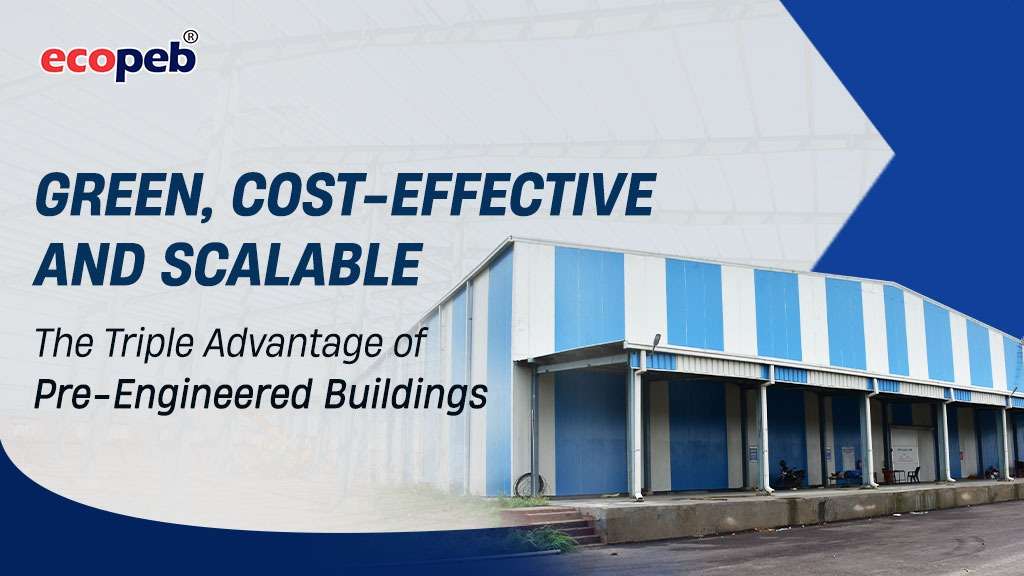
1. Designing with Purpose: Sustainability as Strategy
Sustainability is no longer an afterthought—it’s the blueprint. Forward-thinking organisations recognise that green building is not just ethical, it’s strategic. With pre-engineered buildings, sustainability is built into the process, not bolted on.
PEBs use recyclable steel and generate minimal construction waste. Their off-site fabrication process ensures cleaner job sites and lower carbon footprints. These structures are also inherently compatible with renewable systems—solar panels, rainwater harvesting, and thermal insulation become natural extensions of the building, not exceptions.
Choosing a PEB is choosing long-term planetary responsibility. And in a climate-conscious market, that’s not just commendable—it’s competitive.
2. Building Smart, Spending Smarter
Efficiency is the new luxury—and PEBs deliver it with surgical precision. Traditional construction is riddled with cost overruns, delays, and inefficiencies. PEBs flip the model. With predictable timelines, lean resource utilization, and minimal rework, you get what you plan—on time and on budget.
Think about it: faster build times, reduced labor, lower lifecycle costs, and virtually no compromise on quality. For visionary leaders, this is not just a way to build—it’s a way to scale smartly.
In a world where ROI matters more than ever, pre-engineered structures turn infrastructure from a liability into a strategic asset.
3. Scalability as the New Imperative
If there’s one certainty in today’s business environment, it’s change. Markets expand. Needs evolve. Teams grow. Infrastructure must keep up—or risk becoming obsolete.
This is where PEBs shine. Their modularity allows organizations to expand or reconfigure with ease, unlocking a dynamic infrastructure model that evolves with your vision. Whether you’re adding production capacity, launching in a new city, or reimagining your operational layout—PEBs offer built-in scalability without disruption.
As your business grows, your building should too. With PEBs, that’s not a challenge—it’s the plan.
4. Leading by Example: The New Face of Infrastructure
Modern leaders are measured not just by profitability, but by the legacy they build. Every project is a statement—about values, about vision, about the future. Pre-engineered buildings reflect a new standard: one that blends engineering excellence with environmental consciousness and economic sense.
This is infrastructure not as a static structure, but as a living framework for progress—a foundation that adapts, scales, and inspires.
In logistics parks, tech campuses, smart factories, or educational institutions, PEBs are emerging as the signature of future-ready leadership.
Rethinking the Way We Build
We are no longer building just to occupy space—we’re building to solve problems, spark growth, and shape the future. Pre-Engineered Buildings empower leaders to do all three.
By choosing a PEB, you’re not just constructing a building. You’re signaling a commitment to innovation, sustainability, and intelligent growth.
In a world where infrastructure choices define your agility, credibility, and environmental footprint—green, cost-effective, and scalable isn’t a luxury. It’s a necessity.