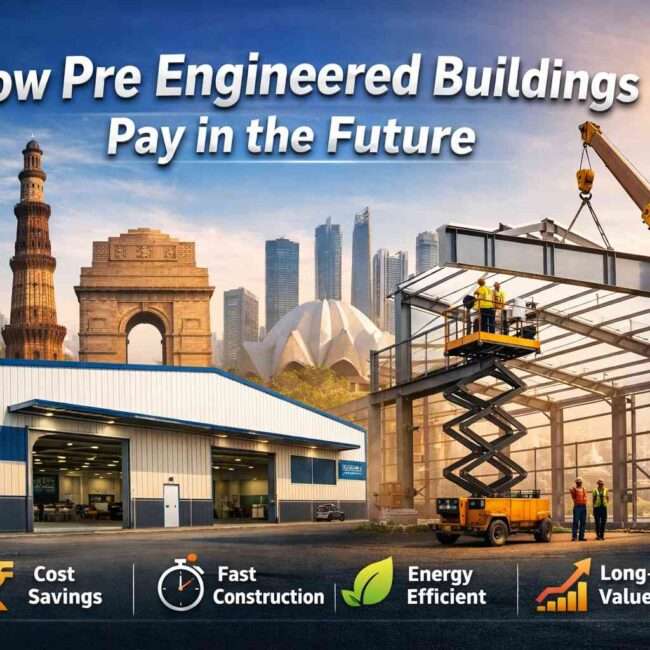

While traditional buildings might seem like the go-to option, there are often hidden costs that can make them less affordable than they appear. From delays in construction to unexpected material price hikes, these can add up quickly. In contrast, PEBs offer a more streamlined approach, helping you avoid these pitfalls. Let’s explore the total cost breakdown for both options.
1. Material and Construction Costs: Precision vs. Redundancy
Pre-Engineered Buildings (PEBs)
Pre-Engineered Buildings (PEBs) are carefully designed using high-strength steel components fabricated in controlled environments. This prefabrication process reduces material wastage, optimizes resource utilization, and ensures cost efficiency. Bulk procurement of steel and streamlined assembly further minimize expenses, making PEBs a cost-effective and reliable construction solution. The overall cost varies based on design complexity and site location.
Traditional Structures
Conventional buildings rely heavily on materials like concrete, bricks, and wood—elements that can vary in cost and availability. On-site material handling, manual construction methods, and unforeseen errors often result in excessive wastage and increased expenses. The unpredictability of costs can make project budgeting more challenging compared to prefabricated alternatives.
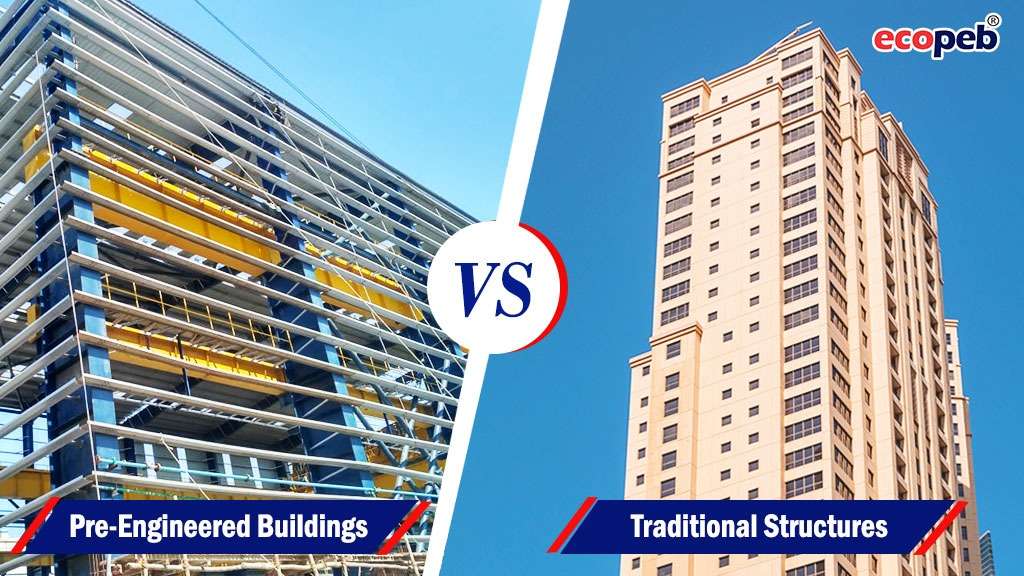
2. Construction Time and Labor Costs: Speed vs. Delays
Pre-Engineered Buildings (PEBs)
PEBs drastically cut down construction time by up to 50% compared to traditional structures. The prefabricated components arrive ready for swift on-site assembly, minimizing dependency on labor-intensive tasks. With shorter timelines, businesses can fast-track operations, reducing workforce expenditure significantly.
Traditional Structures
Traditional construction follows a sequential, labor-heavy process involving excavation, framework erection, bricklaying, curing, and finishing. Weather disruptions and logistical challenges often lead to 12-24 months of construction time, compared to 6-12 months for PEBs. Prolonged project durations result in higher labor costs, making conventional structures less time-efficient.
3. Maintenance and Lifecycle Costs: Durability vs. Constant Repairs
Pre-Engineered Buildings (PEBs)
PEBs stand out for their longevity and minimal upkeep. Crafted from corrosion-resistant steel, these structures are designed to withstand extreme weather conditions while requiring negligible maintenance. With an estimated lifespan of 50+ years, PEBs offer long-term savings by eliminating frequent repair expenses.
Traditional Structures
Traditional buildings are prone to deterioration, demanding frequent repairs for issues such as cracks, water seepage, termite infestations, and structural wear and tear. Over time, the cost of maintaining a conventional building can be 20-30% higher than that of a PEB, impacting financial sustainability.
4. Energy Efficiency and Sustainability: Smart Design vs. Excessive Consumption
Pre-Engineered Buildings (PEBs)
Pre-Engineered Buildings: PEBs integrate smart energy-saving features such as insulated panels, cool roofing, and optimized ventilation, reducing dependency on artificial heating and cooling systems. This results in lower electricity costs and a significantly reduced carbon footprint, aligning with modern sustainability goals.
Traditional Structures
Conventional buildings require additional insulation efforts to match the energy efficiency of PEBs. Poor thermal performance and outdated materials often lead to excessive electricity consumption, escalating operational costs over time.
PEBs—The Future of Cost-Effective Construction
At ecopeb, we understand that cost considerations are crucial when planning a construction project. Pre-Engineered Buildings outshine traditional structures in terms of affordability, faster completion, long-term durability, and eco-friendly advantages. The financial and operational benefits make PEBs the ideal choice for businesses seeking a smarter, more efficient building solution.
If you’re ready to embrace cost-effective, sustainable, and high-performance construction, ecopeb is your trusted partner in delivering world-class PEB solutions. Contact us today to transform your vision into reality at the best value!
FAQ
- What is the cost of construction of a PEB Building?
The cost of constructing a Pre-Engineered Building (PEB) in India generally covers various components such as the basic steel structure, roofing and wall cladding, civil foundation, insulation (if required), electrical work, and finishing work.
- Are PEBs suitable for all types of weather conditions?
Yes, PEBs are engineered to handle extreme weather conditions, including heavy rain, strong winds, and high temperatures. Their structural integrity and corrosion-resistant materials make them durable and reliable.
- What is the cost of Steel used in PEB Construction
The cost of steel in PEB construction typically accounts for 60% to 70% of the total PEB structure cost. As of 2025, the rate of structural steel used in PEBs generally ranges between ₹65 to ₹85 per kg, depending on various factors.
- Can PEBs be customized based on specific business needs?
Yes, PEBs are highly customizable. They can be customized in warehouses, industrial sheds, manufacturing units, and cold storage. EcoPeb can tailor designs based on your functional, aesthetic, and budgetary requirements.
- What factors influence the cost of a PEB?
The cost of a PEB depends on building size, steel quantity, design complexity, site location, insulation type, and interior requirements.
- Why choose EcoPeb for PEB construction?
ecopeb offers end-to-end Pre-Engineered Building solutions with a focus on quality, speed, and cost efficiency.